
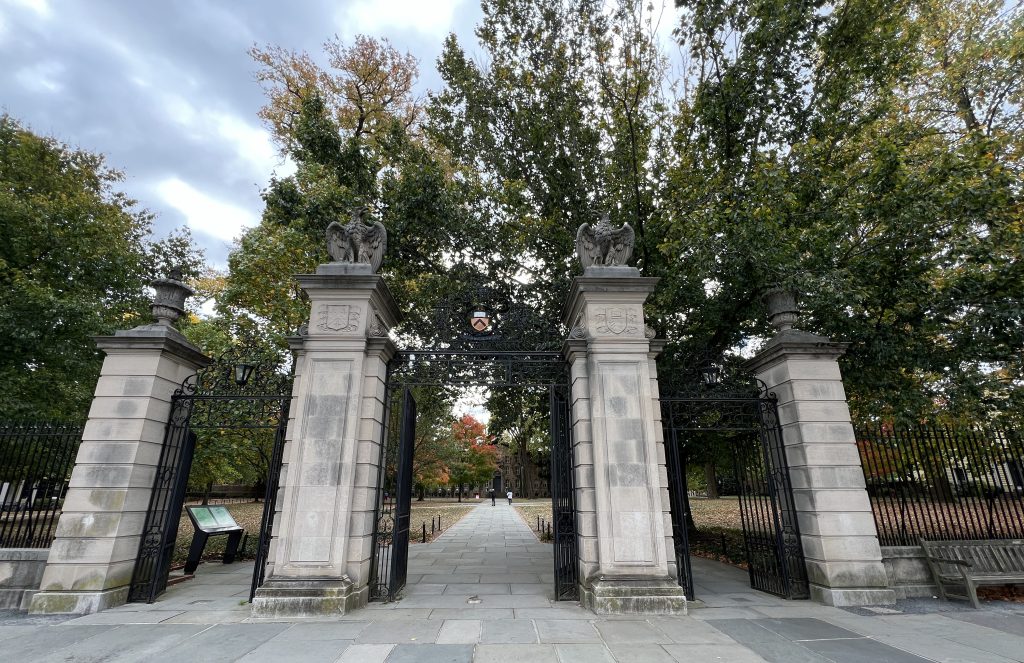
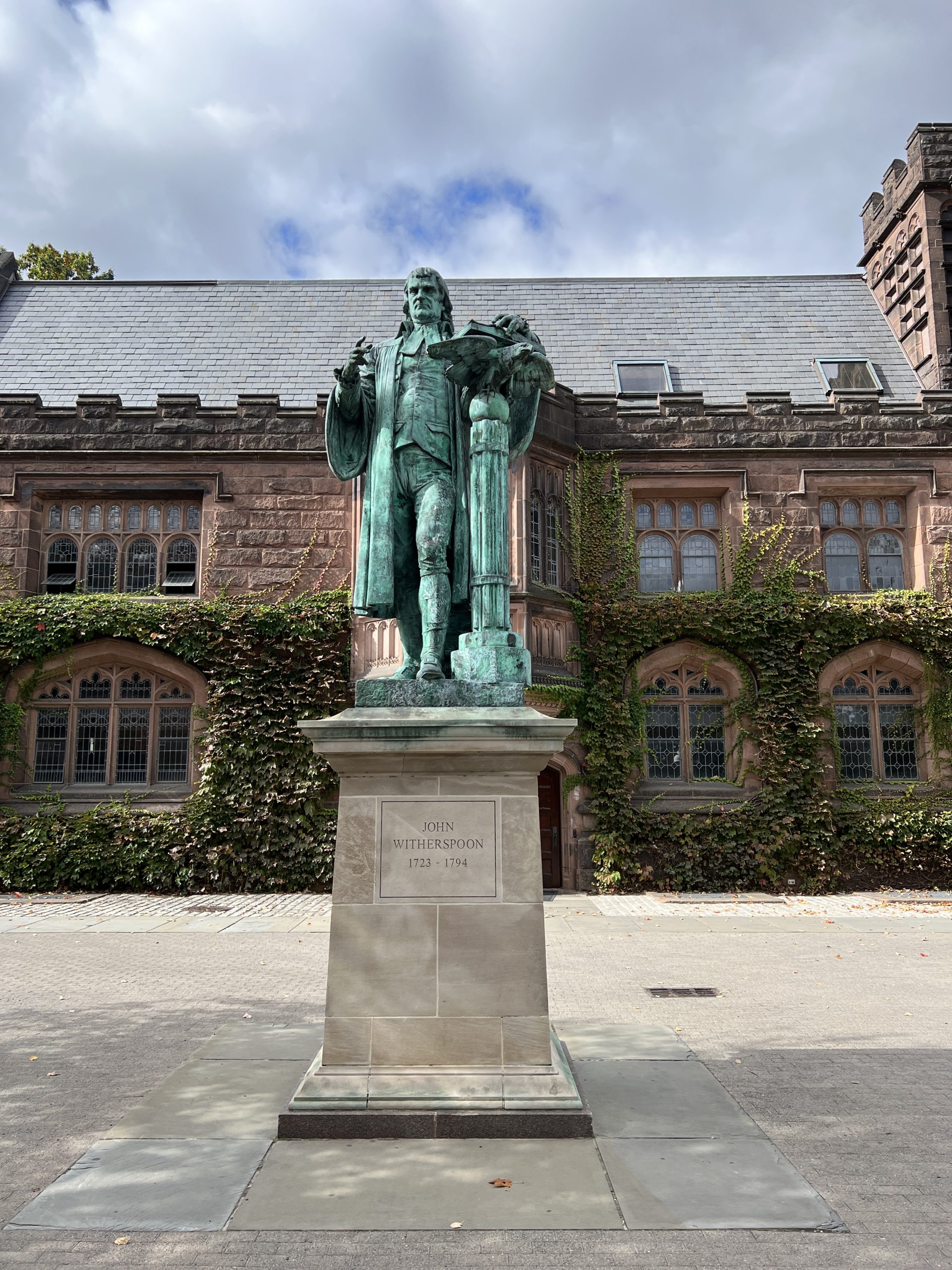
John Witherspoon (1723–1794) was a prominent figure at Princeton University, where he served as the sixth president from 1768.
A Scottish Presbyterian minister, Witherspoon was recruited to lead the College of New Jersey (which would later become Princeton University) and is credited with revitalizing the institution. Under his leadership, he significantly expanded the curriculum to include subjects like moral philosophy, rhetoric, and modern languages. He also mentored a generation of American leaders, including James Madison, who later became the fourth U.S. President
Witherspoon was also a significant figure in the American Revolution. He was the only clergyman and college president to sign the Declaration of Independence, and he served as a delegate to the Continental Congress. He was an outspoken advocate for the Patriot cause, and his influence helped make Princeton known as a “seedbed of revolution.”
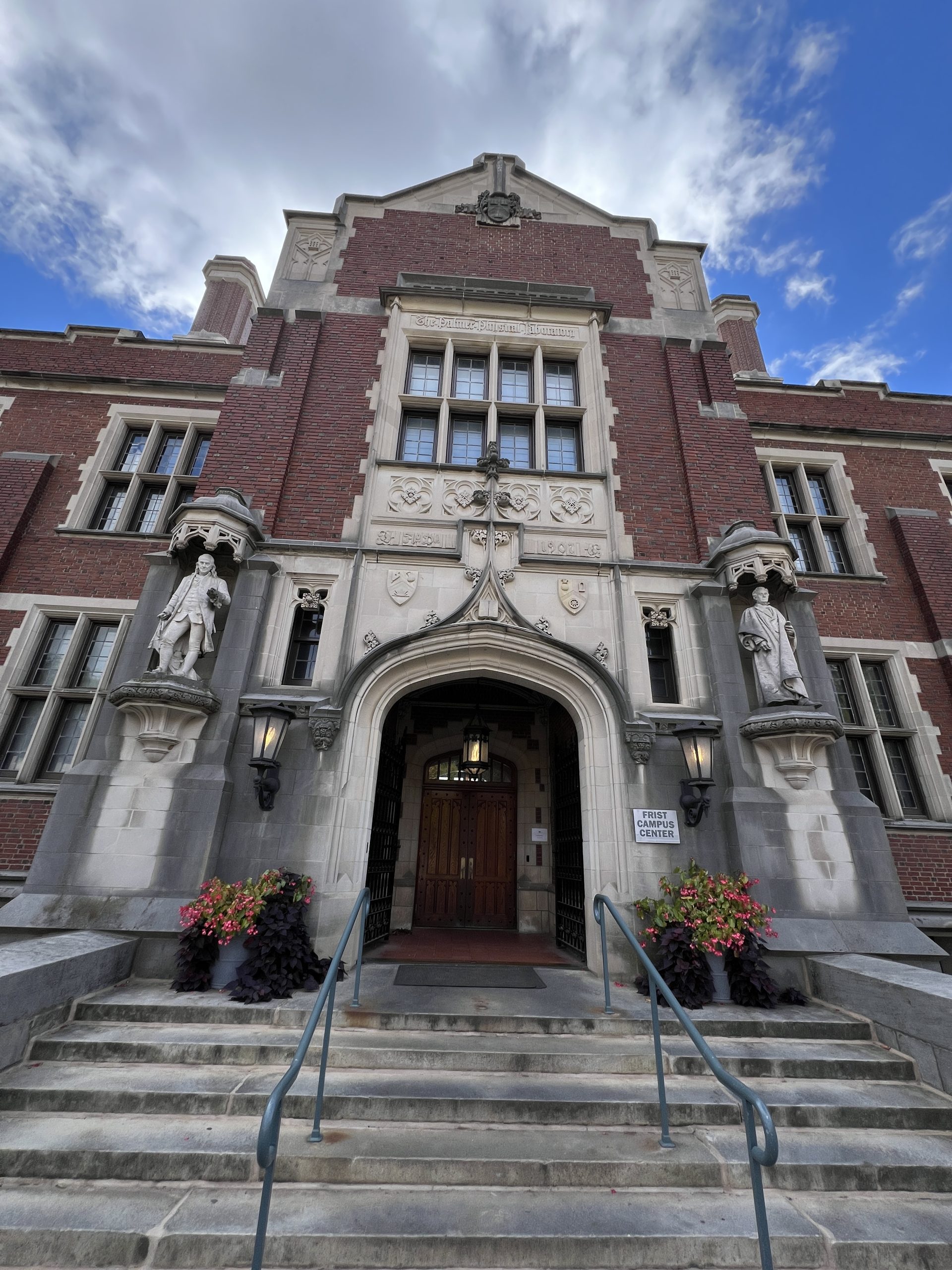
The Frist Campus Center
The Frist Campus Center was originally the Palmer Physical Laboratory, a Collegiate Gothic building constructed in 1909. It served as the university’s physics laboratory until it was renovated and combined with a new modern addition, reopening as the Frist Campus Center in 2000.
Albert Einstein did not have his office in this building, but he did have a significant connection to it. While he was a professor at the Institute for Advanced Study, he lectured on the theory of relativity in Room 302 of what was then the Palmer Physical Laboratory. This lecture hall has been preserved and is still in use today within the Frist Campus Center. His office was located at 109 Fine Hall (now Jones Hall) on the Princeton campus from 1933 to 1939.
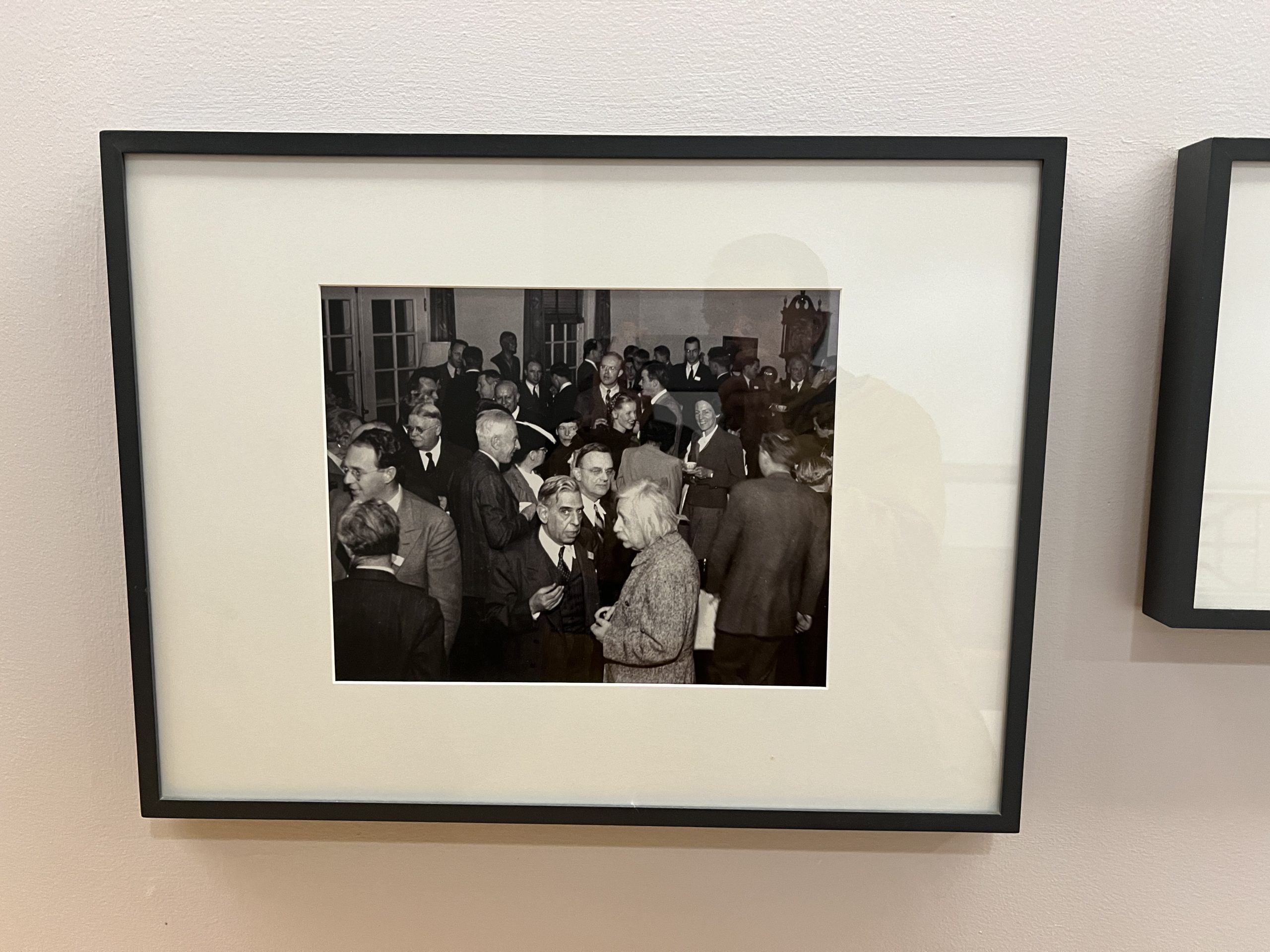
There are many histrionic pictures listed at the lower level of the Frist Campus Center.
Who was talking to Albert Einstein?
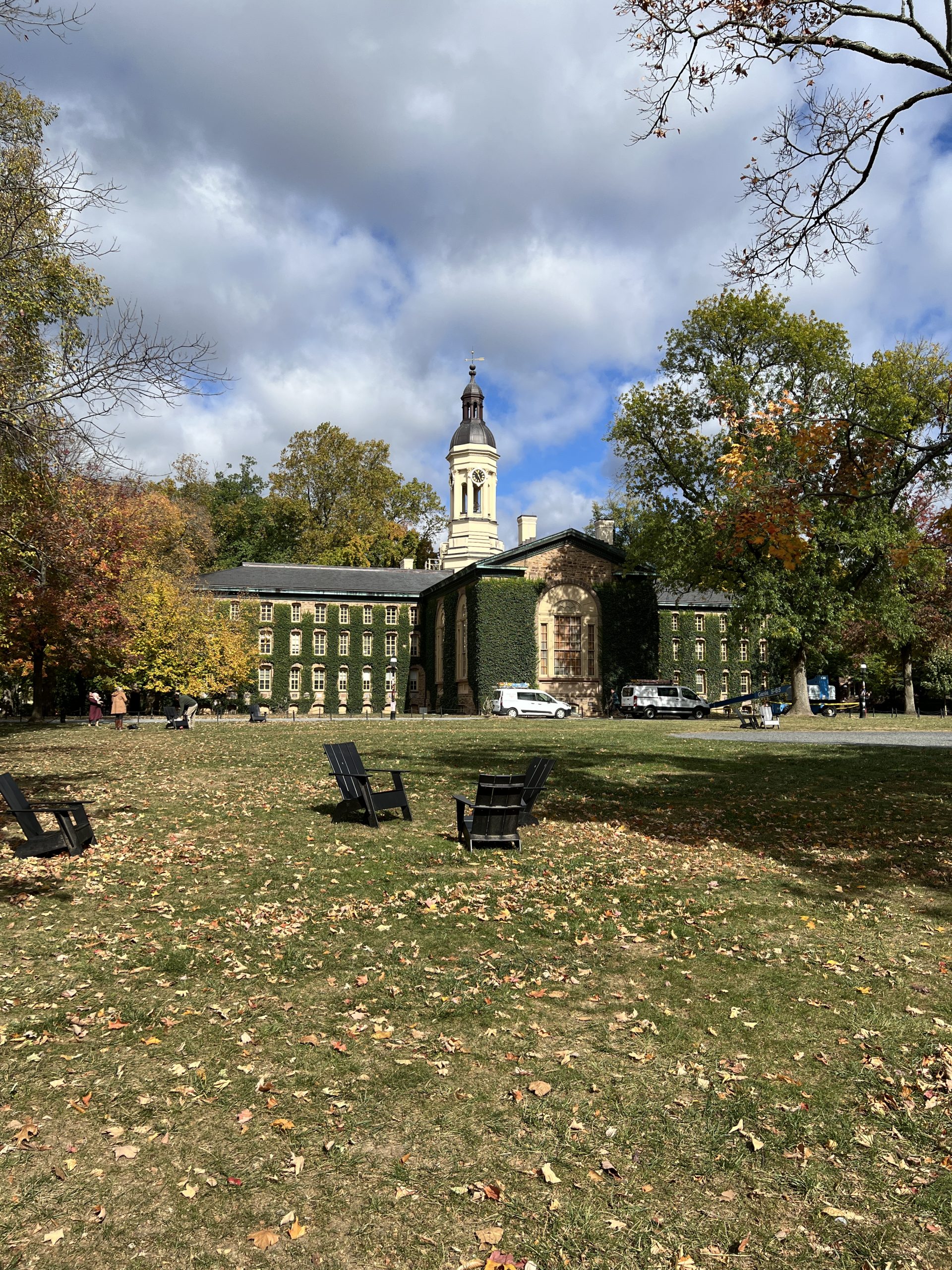
Nassau Hall: Built in 1756, it was the largest academic building in the American colonies at the time. It was the site of a key battle during the Revolutionary War and briefly served as the U.S. Capitol in 1783. Today, it houses the university’s administrative offices, including the president’s office.
爬藤的窗
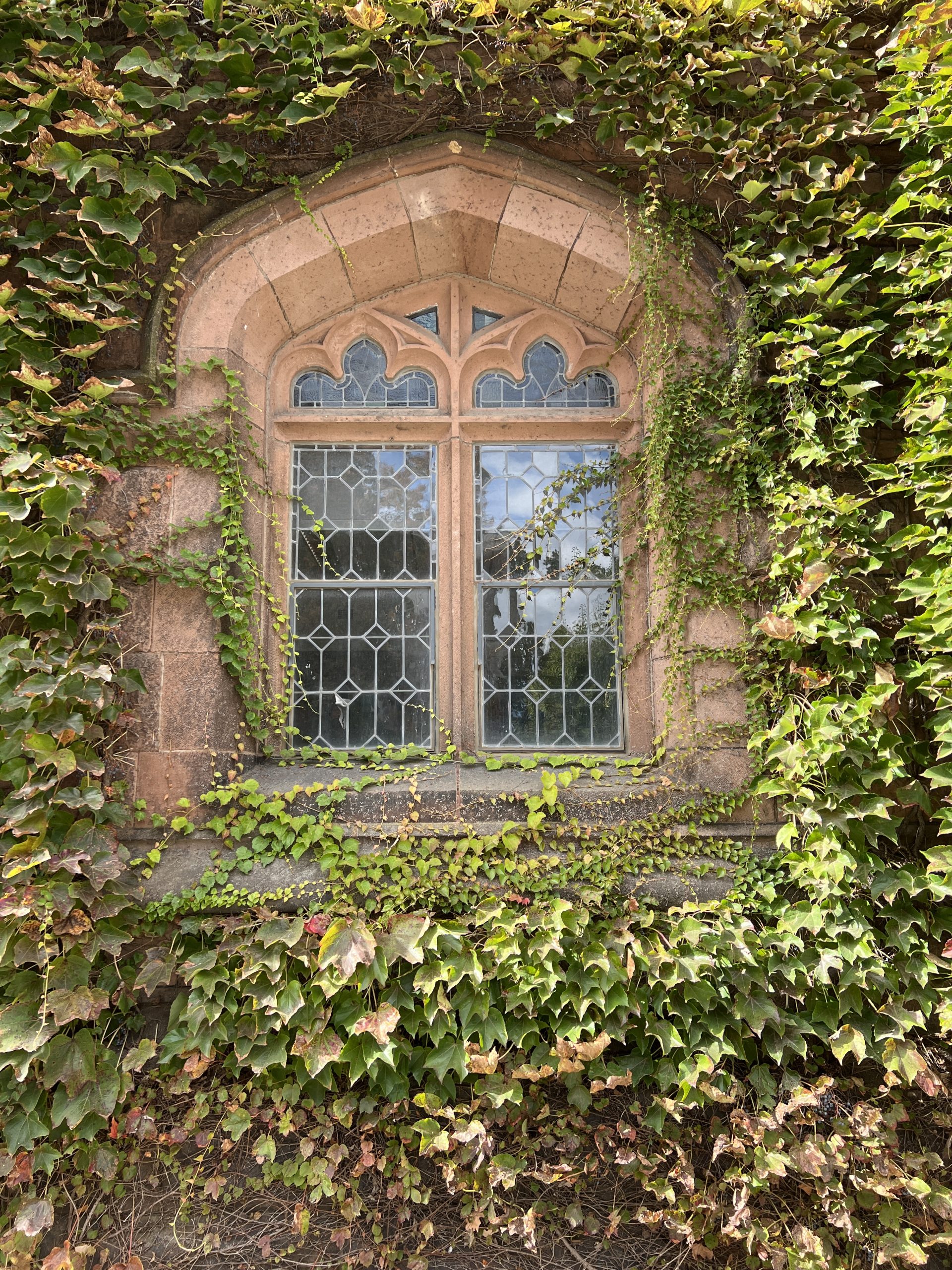
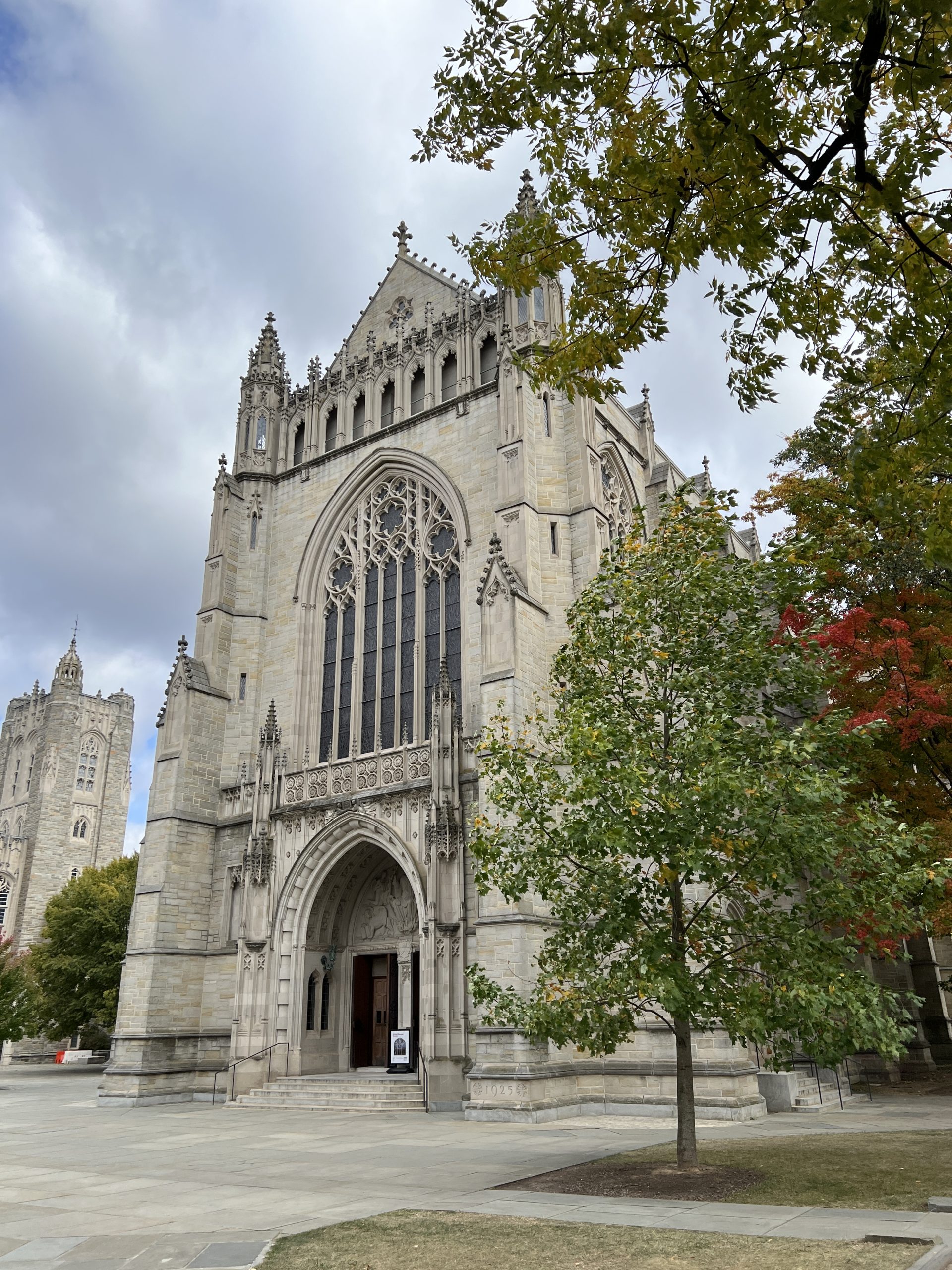
Princeton University Chapel: The current chapel, with its stunning Gothic architecture, was built after a fire destroyed the previous Marquand Chapel in 1920. It is known for its intricate stained glass windows and is one of the most photographed buildings on campus.
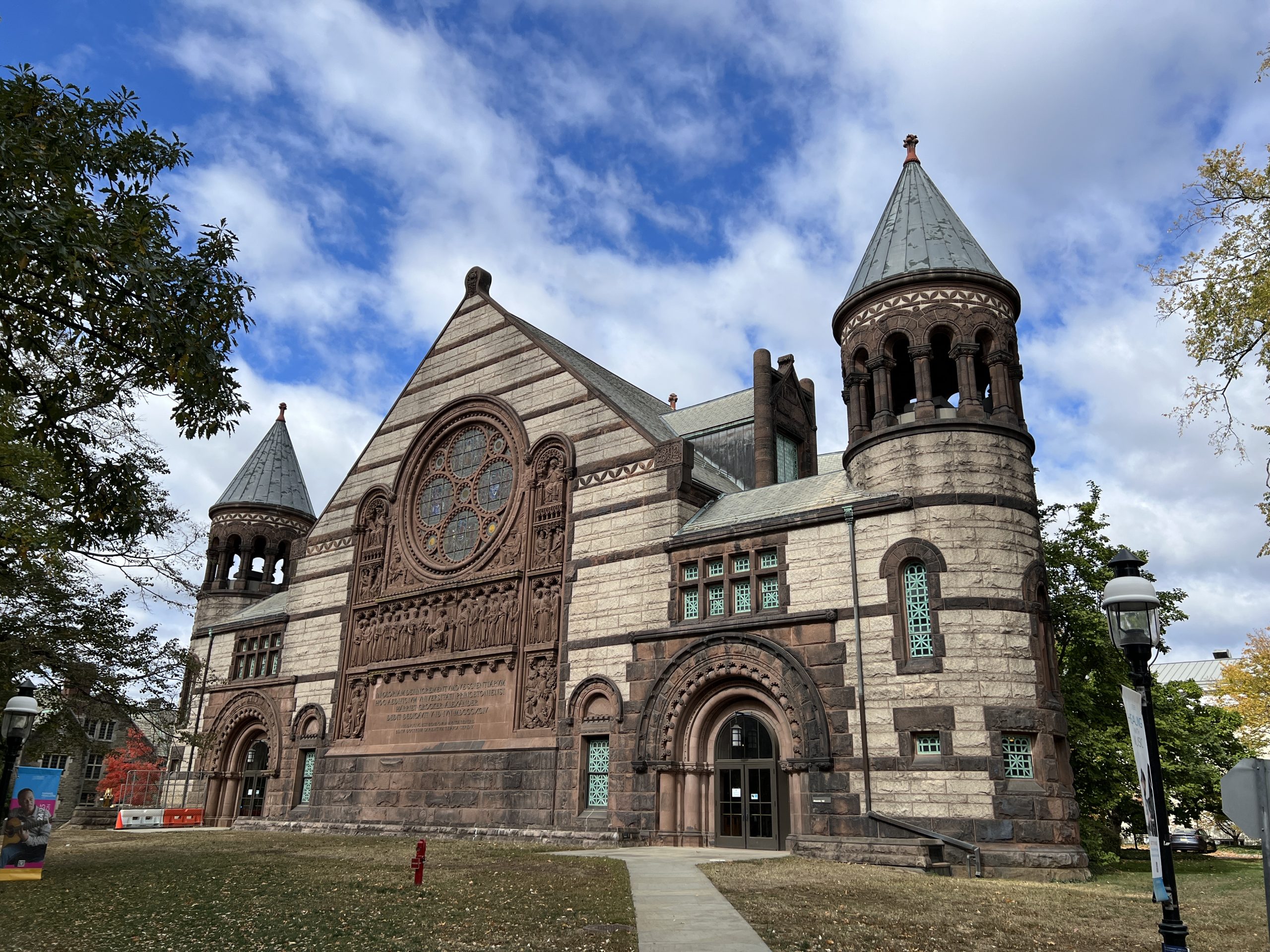
Alexander Hall is a historic 900-seat performance hall that is also known as Richardson Auditorium. It was designed in the Richardsonian Romanesque style by architect William Appleton Potter and was completed in 1894.
Originally built as a congregation hall for large events, including commencement ceremonies and lectures, it has served various purposes throughout its history. It has hosted numerous famous speakers, including Albert Einstein and Woodrow Wilson.
Today, Alexander Hall’s Richardson Auditorium is a premier venue for concerts and performances, serving as the home for both the Princeton University Orchestra and the Princeton Symphony Orchestra. The building is noted for its intricate details, including a Tiffany Glass mosaic titled “Homeric Story” and various sculptures and carvings.
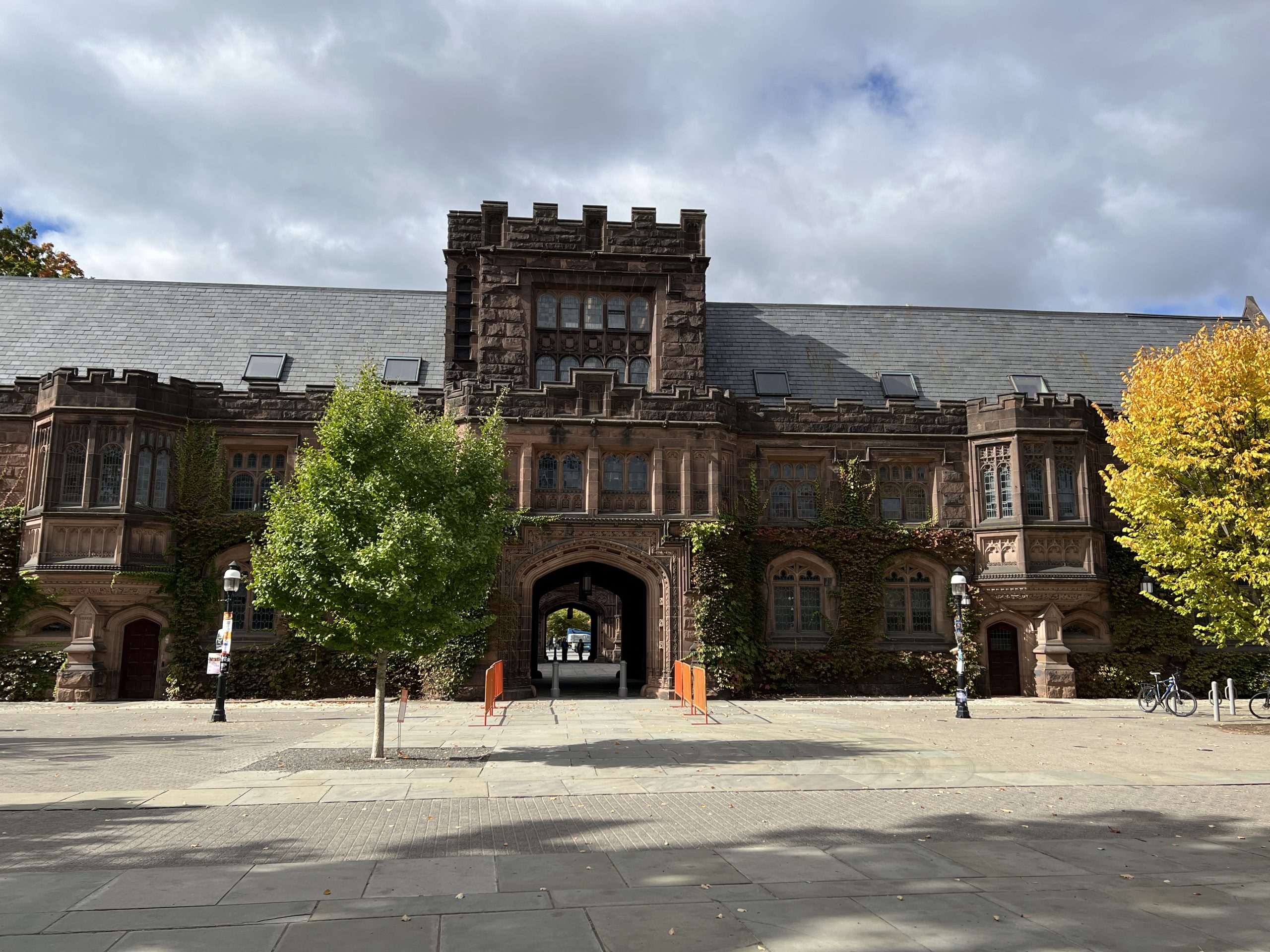
East Pyne Hall is a square building with a central stone courtyard in the Collegiate Gothic style
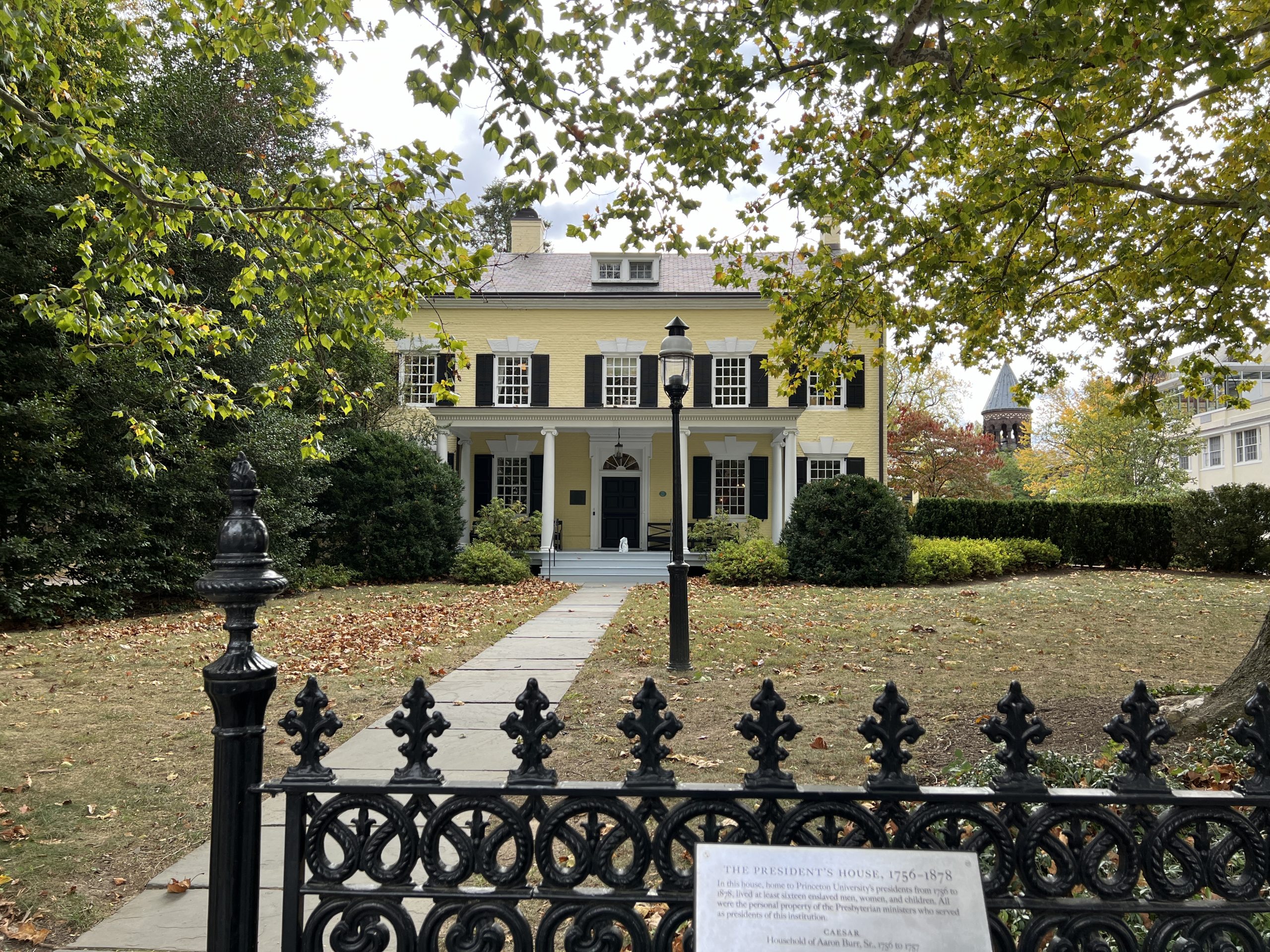
Maclean House: Constructed in 1756, this building originally served as the home for Princeton’s presidents. John Witherspoon, the university’s sixth president, lived here from 1768 to 1779. It is also noted for being the residence of enslaved people during the early history of the university.
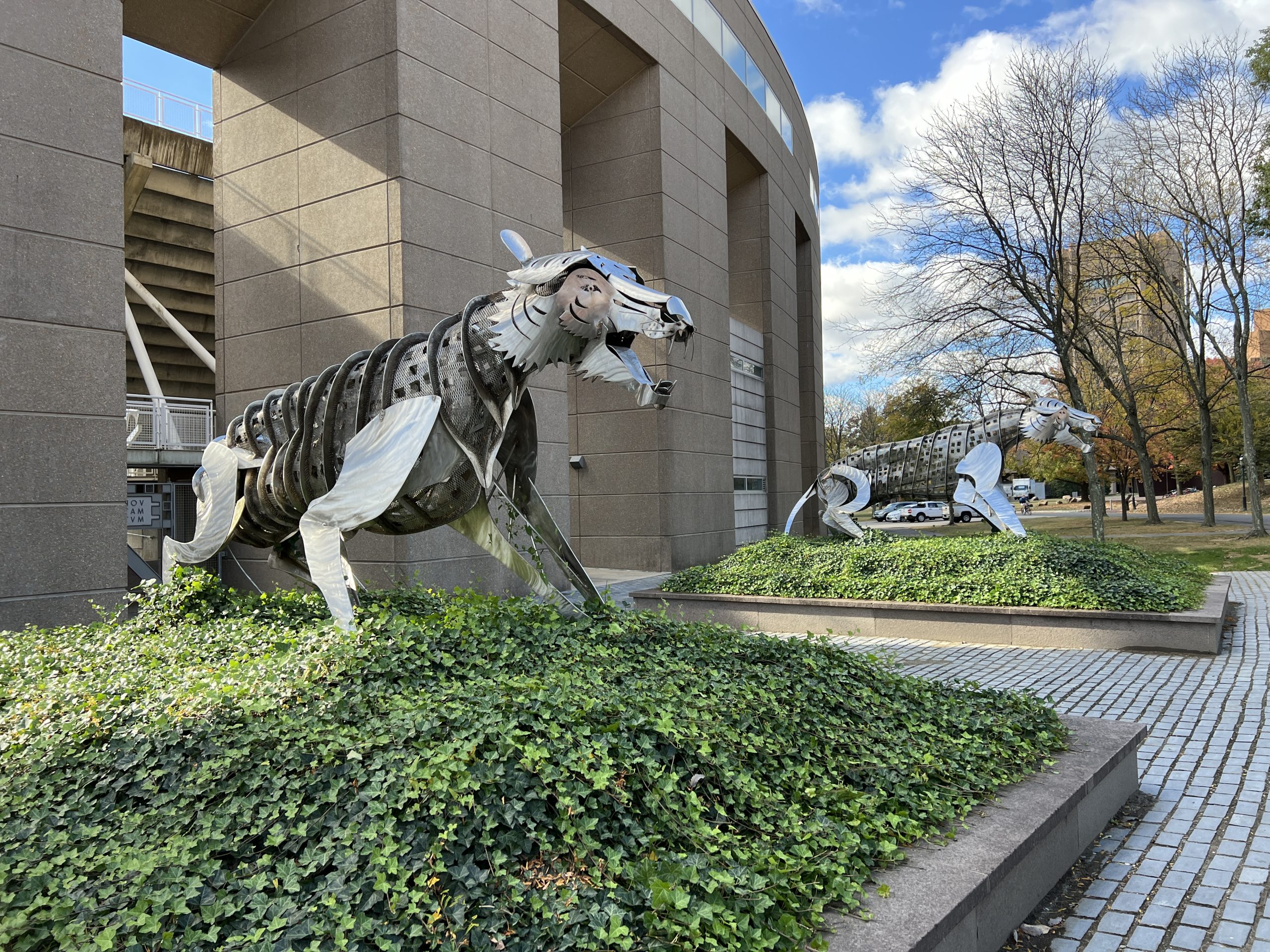
Princeton Stadium
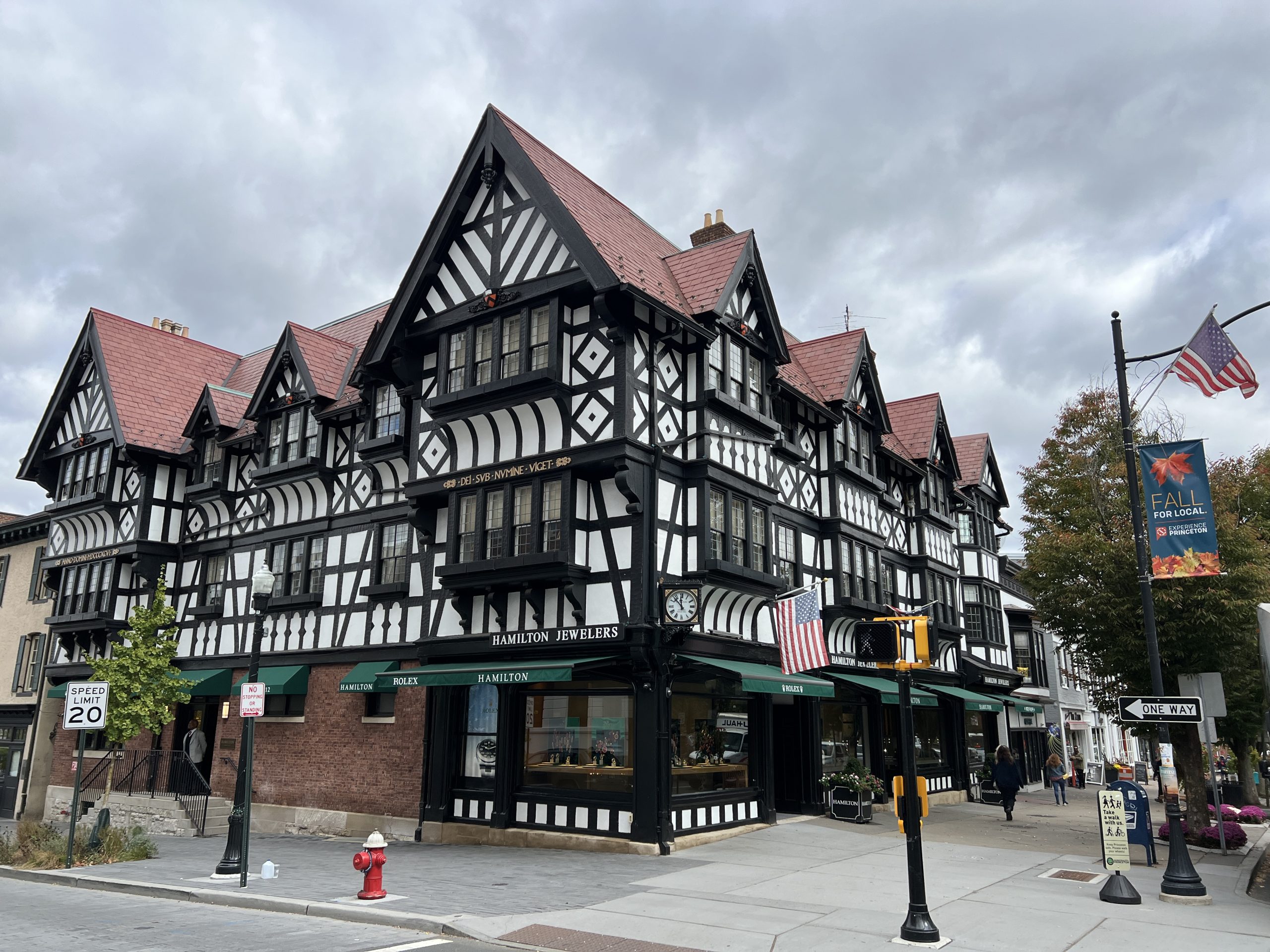
Off-campus
P.S. Visit with Dr. Li